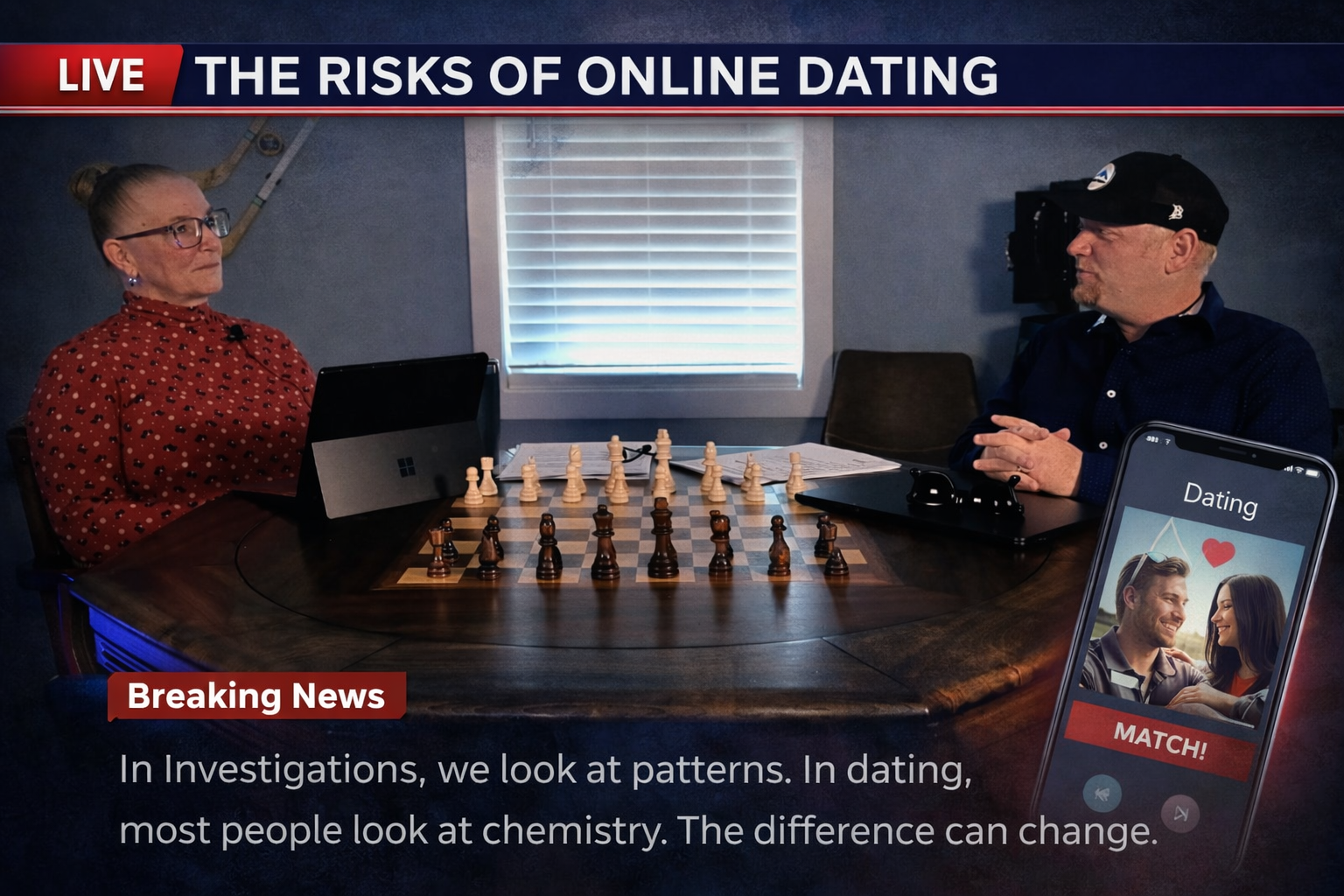
Why digital dating and rapid intimacy can make it harder to recognize dangerous patterns early.
It started with a phone call.
A family member. A missing woman. A timeline that didn’t make sense.
By the time we were hired, she had already been gone for days.
There was no broken window. No obvious signs of a struggle. Her car had been dropped off. She had been seen with someone. She had been texting. And then… silence.
In our latest Evidence Uncovered episode, we walk through what happened next — and how quickly a “normal” dating situation can become something much darker.
But here’s the part that matters beyond this one case:
The most dangerous person in your life often doesn’t look dangerous at first.
The Illusion of Familiarity
Dating today is different from how it was even ten years ago. You can meet someone without ever sharing a room. You can build a connection entirely through messages. You can feel like you know someone based on a profile, a few carefully chosen photos, and consistent texting throughout the day. Conversations become routines. Routines become comfort. And comfort starts to feel like trust.
But digital familiarity is not the same thing as real-world safety.
In investigations, we see this gap all the time. A person can curate exactly how they want to be seen. They can leave out parts of their history. They can hide prior arrests, past violence, or patterns of behavior. They can use alternate phone numbers. They can control what you see — and what you never will. And when something feels slightly off, it’s usually not random. It’s usually your instincts catching something your mind hasn’t processed yet.
The Pattern We Recognize
In the case we discuss in our latest episode, and in many others we’ve worked on, the warning signs didn’t arrive all at once. They built slowly.
There was an on-again, off-again relationship. A history that wasn’t exactly clean. Contact that continued even after boundaries were set. Showing up uninvited. Escalation disguised as affection.
At first, those behaviors can look like passion. Or persistence. Or someone “fighting for the relationship.” But when someone refuses to respect a clear boundary, that isn’t romance. That’s control.
And control almost always follows a pattern. It starts small. It rationalizes itself. It pushes just a little further each time. By the time it feels serious, the groundwork has already been laid.
Dating Apps Don’t Create Danger — But They Lower the Barrier
To be clear, dating apps themselves aren’t the villain. Millions of people meet safely every day. But apps make it easier than ever to reinvent yourself, to omit inconvenient parts of your past, and to accelerate emotional intimacy before real-world trust has been established.
Access happens quickly. Someone learns your schedule, your favorite places, where you work, and where you live. The problem isn’t swiping. The problem is assuming that access equals safety.
When someone moves intensely fast, becomes possessive early, resists boundaries, or tries to isolate you from friends or family, those aren’t personality quirks. Those are indicators. And in our line of work, indicators matter.
What We Wish More People Knew
When families hire us in missing person cases, the language is often the same.
“We didn’t think it was serious.”
“We thought he was just being dramatic.”
“She said it was complicated.”
Complicated can turn dangerous faster than most people expect.
If you are actively dating, especially online, take proactive steps. Look into someone’s background before becoming serious. Meet in public spaces. Keep trusted people informed. Pay attention to minor boundary violations rather than brushing them off. If someone creates chaos when you try to leave, take that behavior seriously. And never minimize your own discomfort because you’re afraid of being rude.
Your safety is more important than someone else’s feelings.
The Hard Truth
Most harm doesn’t come from a masked stranger hiding in the shadows. It comes from someone you allowed close. Someone who felt familiar. Someone who seemed safe. Someone who didn’t look dangerous at first glance.
In the episode, we talk about how quickly things shifted in one of our earliest cases — and how, in hindsight, the warning signs were clearer than anyone realized at the time. We won’t give away the full story here. That’s for the podcast.
But we will say this:
If you’re dating, especially online, trust patterns over promises. The person on the screen is not always the same as the person in real life.
And ignoring that difference can come at a cost that can’t be undone.
Covert Results is the premier private investigations, armed security, cyber security, and training company you’ve been searching for. Our team of highly skilled experts has amassed over 100 years of experience in all fields, from investigations to security concerns. Being a member and working within a global network called The Entrepreneurs Organization allows us to provide excellent service anywhere on Earth – truly bringing peace of mind through our world class services! Be sure to follow @CovertResults across Facebook, Instagram, and LinkedIn for the latest information regarding investigator expertise as well as lighthearted moments shared by our community! If you need us to guide you to that peace of mind you are looking for, call or text 615-861-1680 or email contact@covertresults.com.