Insights from security professionals on threat awareness, emergency response, and building safer workplaces and public spaces.
Active shooter incidents are among the most serious emergencies an organization can face. Although these events are relatively rare, when they do occur, they unfold quickly and create extremely dangerous and chaotic conditions. Schools, businesses, churches, and event venues have increasingly recognized the importance of preparation and planning to reduce risk and respond effectively during a crisis.
While no one wants to imagine facing a situation like this, preparedness is one of the most powerful tools organizations have to protect employees, visitors, and communities. Security professionals understand that the first few minutes of an emergency are often the most critical, and the actions taken during that time can significantly influence the outcome.
At Covert Results, members of our security team draw on professional training and field experience to help organizations think strategically about safety, preparedness, and response planning.
Why Active Shooter Preparedness Matters
Active shooter incidents develop rapidly and often without warning. In many cases, law enforcement may take several minutes to arrive on scene. During that time, individuals already present must make quick decisions in an unfamiliar and stressful environment.
Without preparation, people may freeze or become unsure of how to respond. Preparation and training help replace uncertainty with awareness and clear decision-making. Understanding basic response principles can help individuals move away from danger, assist others, and communicate effectively with first responders.
Organizations that take proactive steps toward safety planning demonstrate a commitment to protecting the people who work in, visit, and rely on their spaces.
Lessons from Active Shooter Response Training
Security professionals often receive training that focuses on responding to high-risk situations and understanding how threats may develop in real-world environments. Members of the Covert Results team have participated in active shooter response training that emphasizes practical skills and situational awareness.
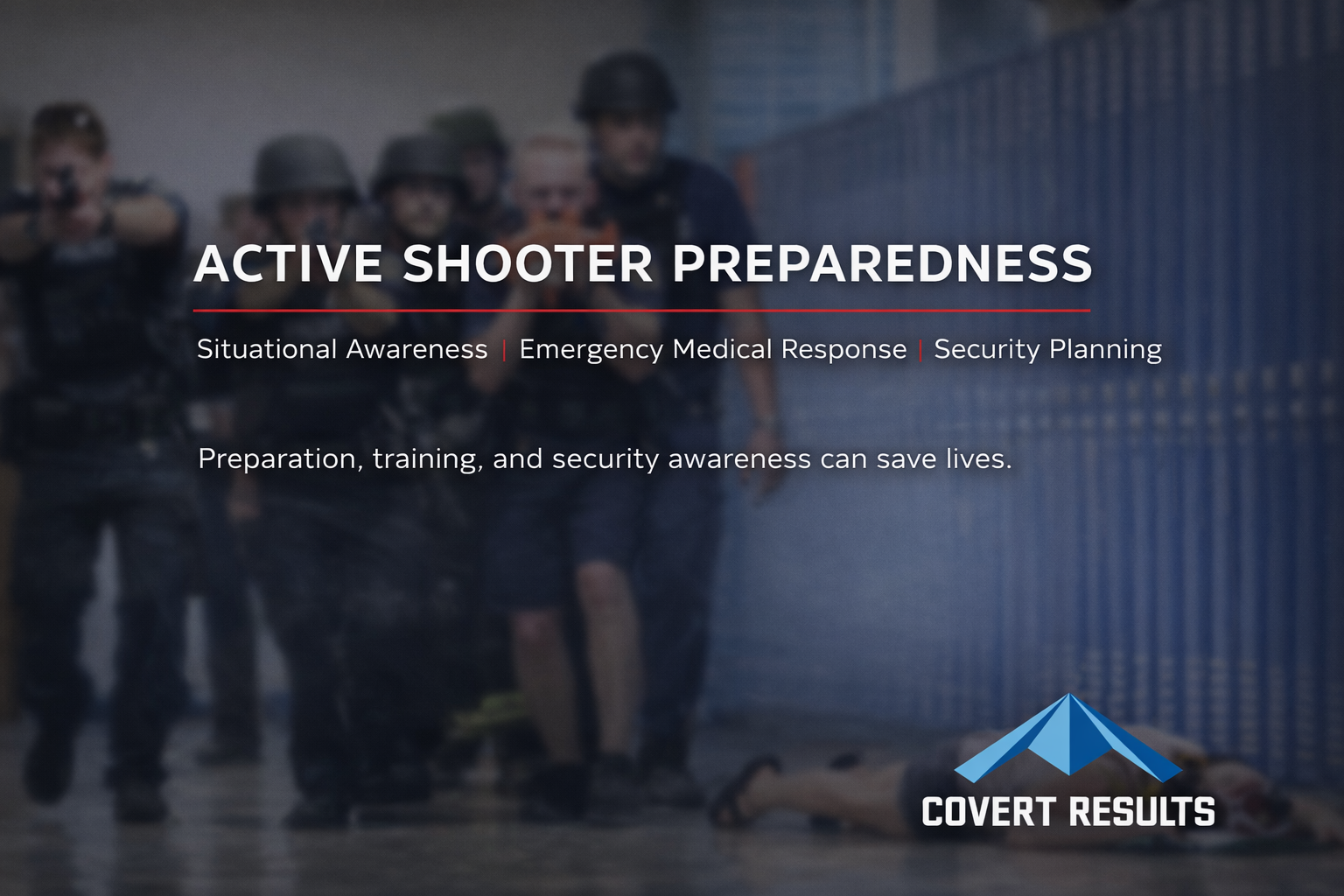
One component of this type of training involves understanding how attackers may move through buildings and how security personnel can respond during those critical first moments. Participants learn concepts such as moving safely through hallways, identifying potential threats, and coordinating communication with others during a rapidly evolving situation.
Training environments often include exercises that simulate movement through structures, allowing participants to better understand how spaces such as hallways, offices, classrooms, or event venues might affect emergency response. These experiences help security professionals think strategically about how environments are laid out and how people can safely exit or avoid dangerous areas.
This type of preparation does not replace law enforcement response, but it helps trained personnel understand how to remain aware, communicate effectively, and support the safety of those around them until first responders arrive.
The Importance of Situational Awareness
One of the most valuable skills emphasized in security training is situational awareness. Many people move through their daily routines without actively observing their surroundings. Developing greater awareness can help individuals recognize potential threats or concerning behavior earlier.
Situational awareness includes understanding the layout of a building, identifying exit routes, recognizing areas that could provide shelter, and being attentive to unusual or suspicious activity. While not every unusual behavior signals danger, early awareness can help organizations respond more quickly to potential risks.
Encouraging employees and staff members to remain observant and communicate concerns is an important part of building a safer environment.
Emergency Medical Response and Bleeding Control
Another critical component of active shooter preparedness involves basic emergency medical response. In many active shooter incidents, injuries occur before emergency medical personnel are able to reach victims. During these moments, immediate action can make a life-saving difference.
Security and response training often includes instruction on controlling severe bleeding and assisting injured individuals until professional medical help arrives. Participants may learn techniques such as applying pressure to wounds, using tourniquets when necessary, and helping stabilize injured victims.
These skills are sometimes referred to as bleeding control or trauma response techniques, and they have become an important part of emergency preparedness training across many industries. In a crisis, even simple actions taken quickly can help slow blood loss and improve the chances of survival for injured individuals.
Understanding how to respond medically during an emergency adds another layer of preparedness that can significantly improve outcomes during high-risk incidents.
Building a Culture of Preparedness
Preparedness is not about creating fear or expecting the worst. Instead, it is about equipping individuals with the knowledge and awareness needed to respond calmly and effectively during unexpected situations.
Organizations that invest in safety planning often find that employees feel more confident and reassured knowing that emergency procedures have been considered. Simple steps such as discussing evacuation plans, identifying exits, and understanding emergency communication procedures can make a meaningful difference during a crisis.
Security planning also helps organizations identify vulnerabilities within their facilities. Evaluating entry points, visibility, communication systems, and emergency procedures allows organizations to strengthen their overall safety strategy.
Partnering with Security Professionals
Preparing for complex threats requires careful planning and professional insight. Security professionals can help organizations evaluate risks, assess vulnerabilities, and develop strategies that improve overall safety.
At Covert Results, our team combines investigative experience with practical security planning to assist organizations in thinking proactively about safety. By drawing on professional training and real-world security experience, we work with clients to help them better understand risks, improve preparedness, and develop strategies that support safer environments.
No plan can eliminate every possible threat, but preparation significantly improves the ability to respond effectively when seconds matter.
Preparation Saves Lives
Active shooter incidents are unpredictable and challenging situations, but preparation can make a meaningful difference. Understanding basic response concepts, maintaining situational awareness, and learning emergency medical techniques all contribute to a stronger culture of safety.
Organizations that take proactive steps toward preparedness demonstrate leadership and responsibility in protecting the people who rely on their spaces every day.
At Covert Results, we believe that thoughtful security planning and awareness are essential tools in today’s world. By preparing today, organizations can create safer environments for employees, visitors, and communities tomorrow.
Covert Results is the premier private investigations, armed security, cyber security, and training company you’ve been searching for. Our team of highly skilled experts has amassed over 100 years of experience in all fields, from investigations to security concerns. Being a member and working within a global network called The Entrepreneurs Organization allows us to provide excellent service anywhere on Earth – truly bringing peace of mind through our world class services! Be sure to follow @CovertResults across Facebook, Instagram, and LinkedIn for the latest information regarding investigator expertise as well as lighthearted moments shared by our community! If you need us to guide you to that peace of mind you are looking for, call or text 615-861-1680 or email contact@covertresults.com.